SEO Strategy & Research
Keyword research, search intent, competitor analysis, existing rankings, content gaps, and keyword-to-page mapping help determine where the strongest organic opportunities exist.
Scale SEO provides ongoing SEO campaign management for professional service and B2B businesses in Calgary and across Canada.
Every campaign is built around your website, market, and competitors. These are the areas the work draws on, with priorities set by what will move results most each month.
Keyword research, search intent, competitor analysis, existing rankings, content gaps, and keyword-to-page mapping help determine where the strongest organic opportunities exist.
I identify and resolve issues affecting crawling, indexation, rendering, performance, redirects, canonicalization, structured data, sitemaps, migrations, and other technical foundations.
Important service and landing pages are improved around search intent, content quality, headings, internal linking, metadata, topical relevance, site architecture, and usability.
Content strategy can include improving existing service pages, creating new commercial pages, building useful guides, developing industry content, and consolidating pages that overlap or compete.
For businesses targeting specific geographic markets, campaigns can include Google Business Profile optimization, local search research, Google Maps visibility, citations, reviews, location content, and local authority signals.
Where required, I can improve layouts, calls to action, navigation, trust signals, forms, landing pages, and other elements affecting how organic visitors interact with your website.
Performance is monitored through Google Search Console, analytics, keyword visibility, important landing pages, conversions, enquiries, local search performance, and campaign-specific metrics.
Month-to-month, scoped around your business, and run directly by me — no junior account managers.
See SEO pricing →SEO campaigns shouldn’t be built around completing the same list of tasks every 30 days.
Priorities change as your website improves.
If important pages aren’t being indexed correctly, publishing more blog content probably isn’t the first priority.
If the technical foundation is healthy but competitors have substantially stronger service pages, improving those pages may produce a greater return.
If rankings and traffic are increasing but enquiries aren’t, the problem may have shifted from visibility to conversion.
And if your strongest pages are beginning to rank on page two, strengthening those existing opportunities may make more sense than starting another completely unrelated content campaign.
That’s why I work from an evolving strategy rather than a fixed package. Each month, I look at the available search data, current rankings, completed work, competitive landscape, and business priorities to determine what should happen next.
The campaign changes as the opportunity changes.
There isn’t one SEO model that works equally well for every business.
The strategy depends heavily on where your customers are, how they search, and how they choose a provider.
Local SEO is important when proximity influences who a customer chooses.
A Calgary business, for example, may need visibility across traditional organic results as well as Google Maps and its Google Business Profile.
The strategy therefore needs to strengthen both the website and the business’s local search presence.
Not every customer cares whether the provider is five kilometres away.
Businesses serving customers across Alberta or Canada may rely much more heavily on strong service pages, industry expertise, content, technical SEO, internal architecture, and authority.
The website becomes the primary platform for capturing demand across a much larger market.
B2B and professional service SEO often involves lower search volumes but much higher-value enquiries.
A search term doesn’t need thousands of searches per month to be commercially important.
For an accounting firm, consultancy, financial service provider, or other professional business, a relatively small number of highly qualified searches can produce significantly more value than thousands of unrelated website visitors.
That’s why I prioritize commercial relevance over raw traffic volume.
SEO should eventually show up in real search data.
One of the professional service firms I work with came to Scale SEO with important commercial keywords sitting around page five of Google.
After improving the site’s technical foundation, service-page structure, internal linking, content, and overall search strategy, those terms moved into first-page positions.
The campaign focused on strengthening the pages most closely connected to the firm’s actual services rather than chasing unrelated traffic.
As rankings improved, Google Search Console showed substantial growth in search visibility and clicks, giving the firm a stronger organic presence for the searches its potential clients actually make.
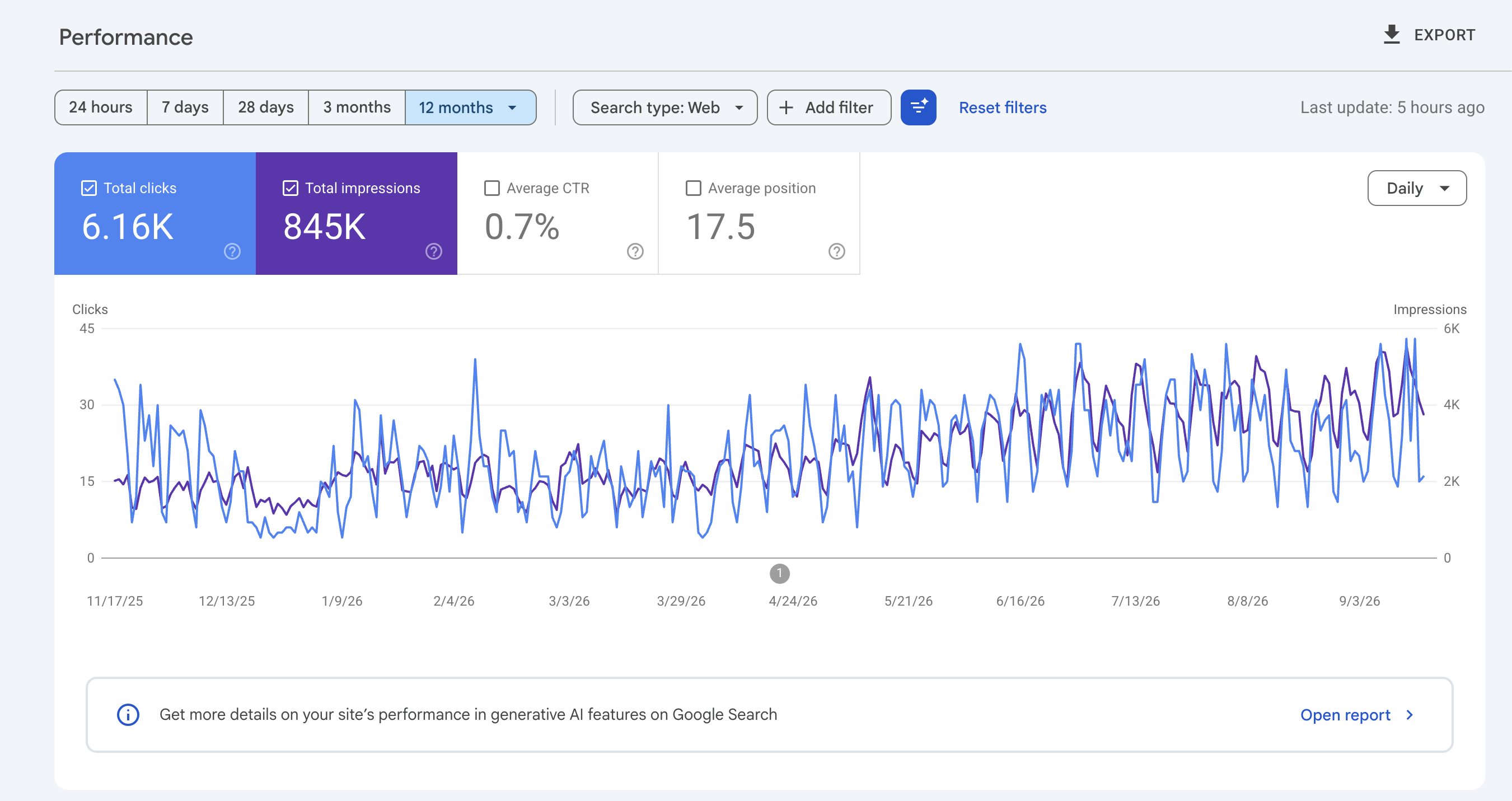
Every campaign is different, but the first few months usually establish the technical foundation, search strategy, priority pages, and measurement needed for longer-term growth.
The campaign begins by establishing where your website stands today.
I review your technical foundation, Google Search Console data, existing rankings, important pages, competitors, content, internal structure, and target market.
This creates a prioritized roadmap based on the problems and opportunities actually present on your website.
Once priorities are clear, implementation becomes the focus.
That can include technical fixes, restructuring important pages, improving on-page SEO, strengthening internal links, implementing schema, updating content, and addressing local search issues.
The highest-impact work comes first.
As the foundation improves, the campaign begins expanding into additional opportunities.
That may mean creating new service or supporting pages, developing content, strengthening local visibility, improving authority, or pushing pages already beginning to move in search.
Early Search Console and ranking data also starts informing future priorities.
SEO doesn’t reset every month.
The work completed earlier should create a stronger foundation for everything that follows.
As more data becomes available, I continue improving pages gaining traction, address new opportunities, expand relevant content, strengthen authority, and adjust the strategy around what Google and your customers are actually responding to.
Ongoing SEO makes the most sense when organic search can become a meaningful customer acquisition channel for your business.
I primarily work with professional service and B2B businesses because qualified organic enquiries in these markets can have significant long-term value.
Explore Industries→SEO isn’t automatically the right acquisition channel for every business.
If you need enquiries immediately, paid search may be more appropriate in the short term.
If very few people search for what you sell, another acquisition channel may offer a better opportunity.
And if you already have an internal marketing or development team and simply need an independent assessment of your website, you may not need an ongoing SEO retainer at all.
In that situation, a standalone audit can give your team a prioritized roadmap to work from.
SEO campaigns are scoped around the business rather than sold as Bronze, Silver, or Gold packages.
After reviewing your website and search landscape, I’ll explain what I think needs to be done and what an appropriate monthly scope looks like.
All ongoing SEO engagements are month-to-month with no long-term lock-in contract.
For businesses that aren’t ready for ongoing SEO, standalone audits are also available.
SEO typically develops over months rather than days or weeks.
Some technical or on-page improvements can produce relatively quick movement, while competitive commercial searches can take considerably longer.
Your existing website authority, competition, technical condition, content, target market, and starting rankings all affect the timeline.
I provide a more realistic assessment after reviewing your website rather than promising the same timeframe to every business.
Ongoing SEO is priced as a monthly retainer based on the scope required for your website and market.
Factors such as competition, website size, technical requirements, content needs, target locations, and current search visibility all affect the amount of work required.
I don’t use fixed packages because different businesses rarely need exactly the same SEO work.
No.
No SEO provider controls Google’s search results, and rankings can change as algorithms, competitors, websites, and search behaviour evolve.
I focus on improving the factors we can influence and measuring whether organic visibility, relevant traffic, and business opportunities are moving in the right direction.
Yes.
Technical SEO is included where required as part of ongoing campaigns and can cover crawling, indexation, redirects, canonicalization, performance, structured data, internal architecture, migrations, and other technical issues affecting organic search.
Yes.
For businesses targeting specific geographic markets, SEO campaigns can include Google Business Profile optimization, local keyword research, citations, reviews, location content, local landing pages, and other work designed to strengthen local search visibility.
Yes.
Content work can include improving existing service pages, creating new commercial pages, building industry or location content, updating articles, and developing supporting resources around genuine search opportunities.
The goal is to create content that supports the wider SEO strategy rather than publishing articles simply to hit a monthly quota.
Yes.
One of the advantages of working with Scale SEO is that I can implement many technical, content, structural, and on-page improvements directly rather than only providing recommendations for another developer or marketing team.
I look at a combination of Google Search Console data, organic traffic, keyword visibility, important landing pages, conversions, enquiries, and other metrics relevant to the business.
Rankings are useful, but they’re considered alongside whether the website is becoming more visible to the right audience and generating meaningful opportunities.
No.
Ongoing SEO campaigns are month-to-month.
Your website, accounts, content, data, and digital assets remain yours.